Our lab’s research program is driven by a general fascination for the natural world, and the overall enjoyment we get from ecological investigation. Out of unavoidable necessity, issues associated with our rapidly changing Earth provide a larger context for much of our work. We utilize a variety of research approaches and tools, including greenhouse experiments, high throughput DNA sequencing, bioinformatics, statistical modeling and a plethora of dirty, sweaty, bug-bitten fieldwork activities. Below are some brief outlines of our main work areas, with the wetland and temperate-boreal ecotone work being the most active.
Wetlands Ecology
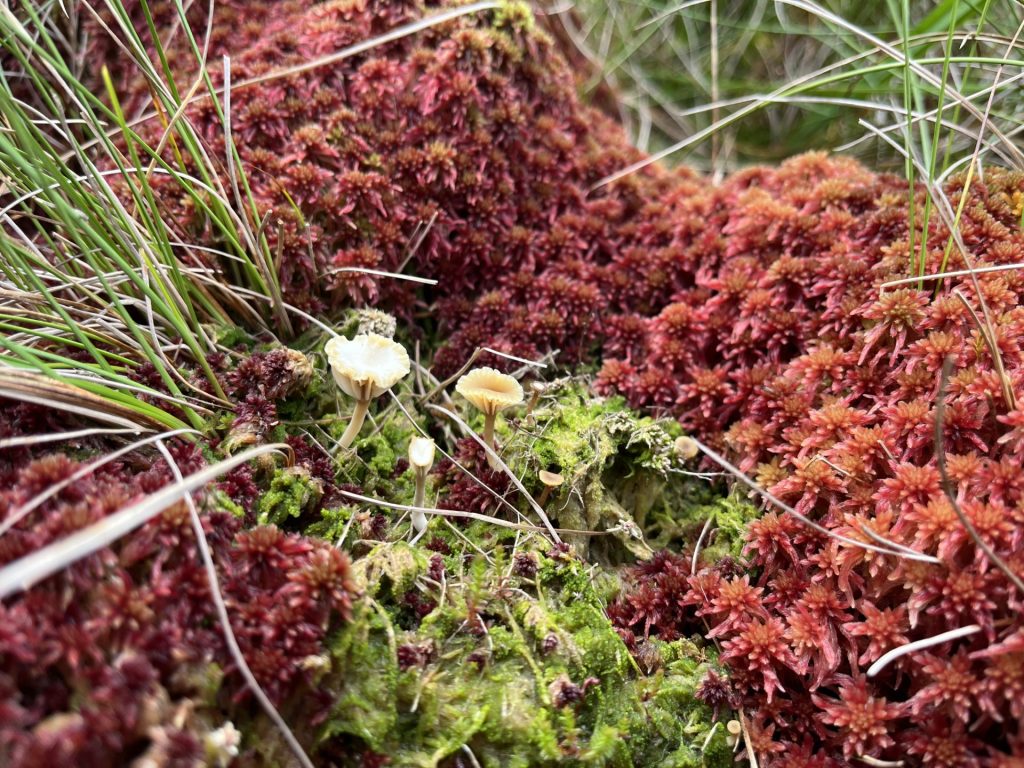
Carbon accumulating wetlands (peatlands) contain up to 30% of Earth’s soil carbon, while occupying only about 3% of its terrestrial surface. Their role in carbon cycling is an important reason to study them, however first and foremost peatland habitats and organisms are just plain awesome. All sorts of details jump out when you look closely at a patch of Sphagnum in a peatland. Much of our peatland work is interested in the local and broad-scale (e.g., global) patterns of peatland microbial communities among and within peatland habitats, often in a carbon cycling context. This has included many important collaborations (e.g., the Global Peatland Microbiome Project) with colleagues at the US Forest Service, Michigan Tech, SUNY-ESF, the University of New Hampshire, and many other places.
Important current directions of our work in peatlands, and wetlands more broadly, include:
- Uncovering the roles of fungi in ecosystem processes across vertical soil profiles
- Assessing the potential for wetlands to be unique reservoirs of fungal diversity relative to the upland landscapes they are embedded within
- Developing wetland-specific frameworks for mycorrhizal ecology, from plant and fungal perspectives, both within and among mycorrhiza types.
- Some of us are also particularly interested in the linkage between wetlands restoration and mycorrhizas.
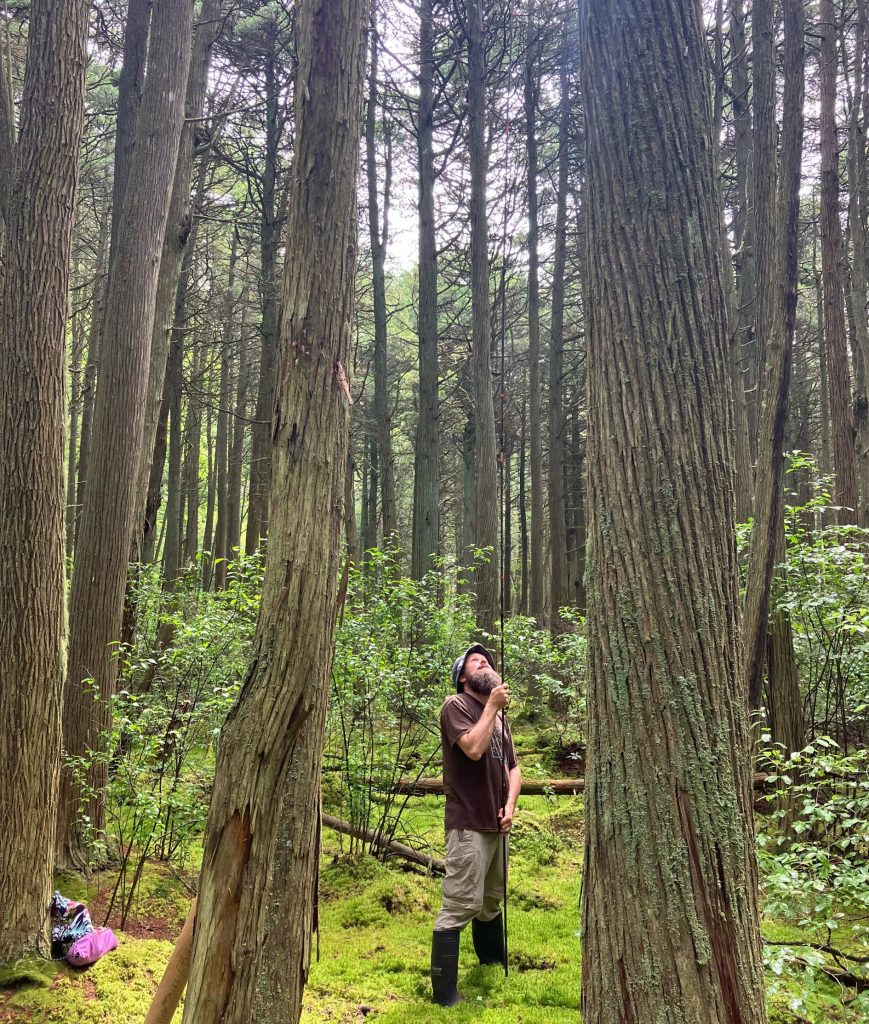
Mycorrhizal Ecology at the Temperate-Boreal Ecotone
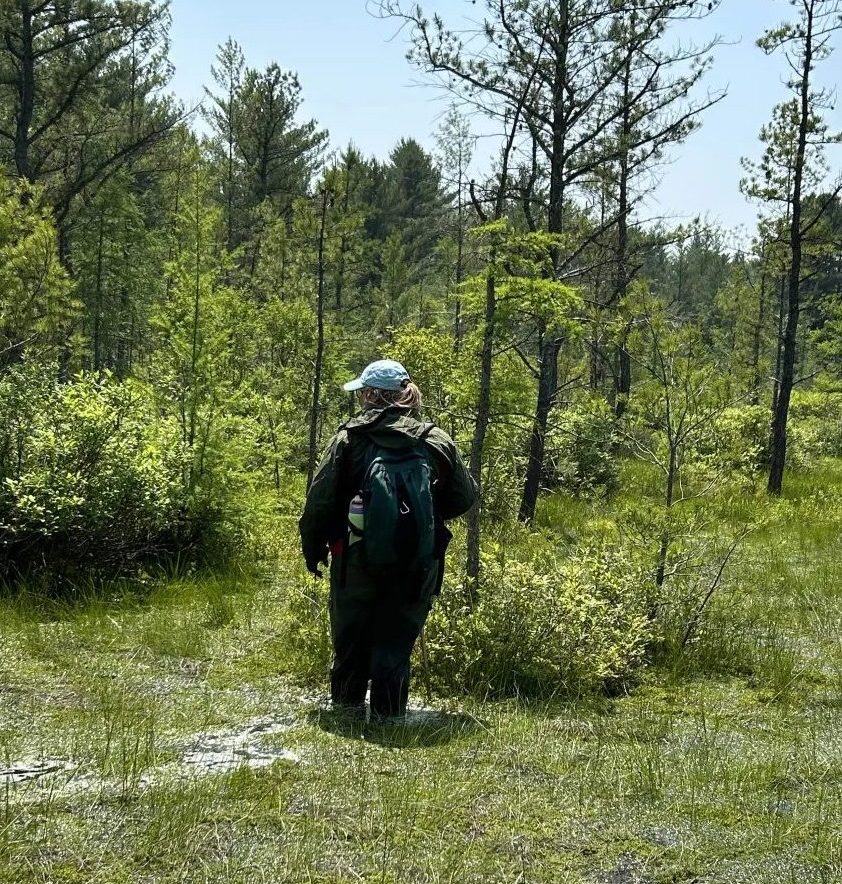
Changes in climate, management practices and pathogens are altering the composition of Earth’s forests, with impacts that should be particularly evident at transitions (ecotones) between biomes where the ranges of many species intersect. Species interactions, such as mycorrhizas, may modulate a tree species’ ability to establish beyond its range boundary in response to changing conditions, highlighting the importance of understanding how the distributions and identities of fungi affect seedling establishment.
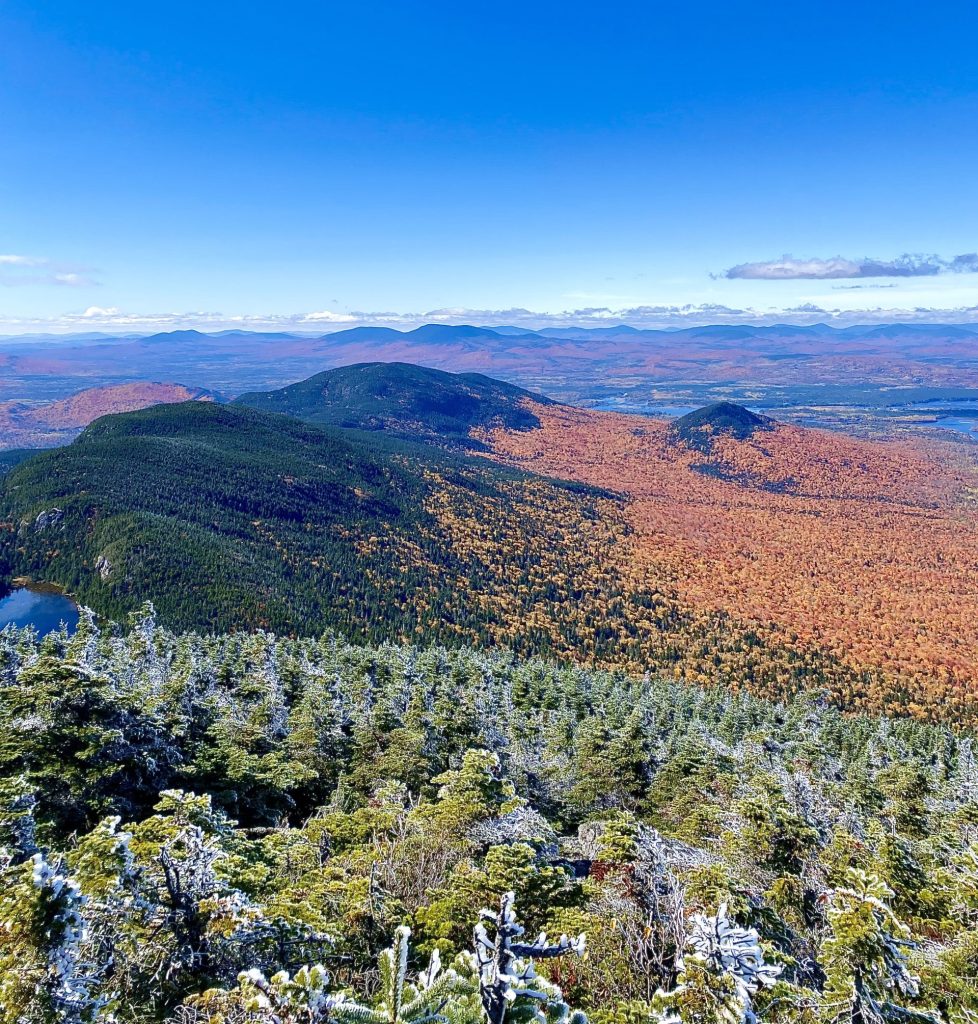
We are currently working on this topic using the temperate-boreal ecotone that forms on mountains in the Northeastern US, in close collaboration with colleagues at SUNY ESF, the Appalachian Mountain Club and the University of Maine. In this system, temperate-boreal ecotones form where lower elevation temperate hardwood forests meet higher elevation montane boreal conifer forests, representing an interesting shift in tree and mycorrhiza types (mixed arbuscular mycorrhizal/ectomycorrhzal hardwoods to ectomycorrhizal conifers), and associated ecosystem characteristics, that could impact the ability of tree seedlings to establish upslope or down-slope across the ecotone. There is also a lot we don’t know about the fungal communities at these ecotones.
Using the Northeastern Mountain Network (12 mountains from New York to Maine) established by our colleagues, our current activities include:
- Modeling and mapping fungal communities as a function of temperature, soil characteristics, topography and vegetation
- Building mountain- and regional- scale plant-fungal interaction networks of in situ communities and potential networks formed by novel species combinations brought together when propagules disperse across the ecotone
- Testing the roles of mycorrhizal fungi as biotic filters to tree seedling establishment
Invasive and Native Understory Woody Plants
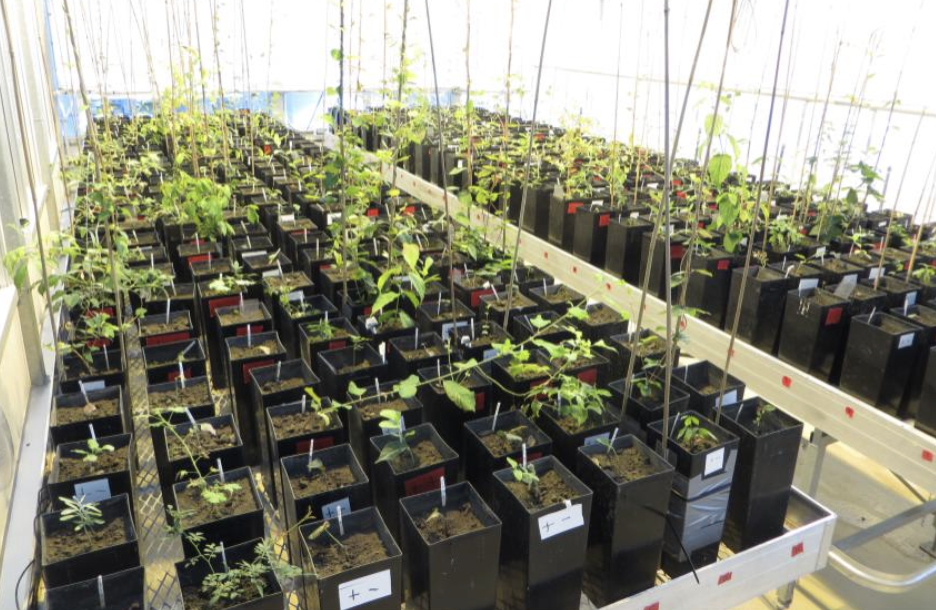
We have done quite a bit of work contrasting the interactions of native and invasive woody plants with root-associated fungi in Eastern North American forests, in conjunction with collaborators at SU and Clemson University. This work uses a range of plant taxa, often with congeneric invasive and native species.
Some key aspects of this work include the following.
- Examining the relative importance of arbuscular mycorrhizal fungi (AMF) vs. pathogens on plant growth.
- Comparing the influence of plant nativity status on fungal community structure.
- Some of the patterns that have emerged are clearly linked to root traits (e.g., specific root length, root diameter), which has led us to develop a general interest in the connections between belowground plant strategy and root-associated fungal communities
Cottonwood Community Genetics
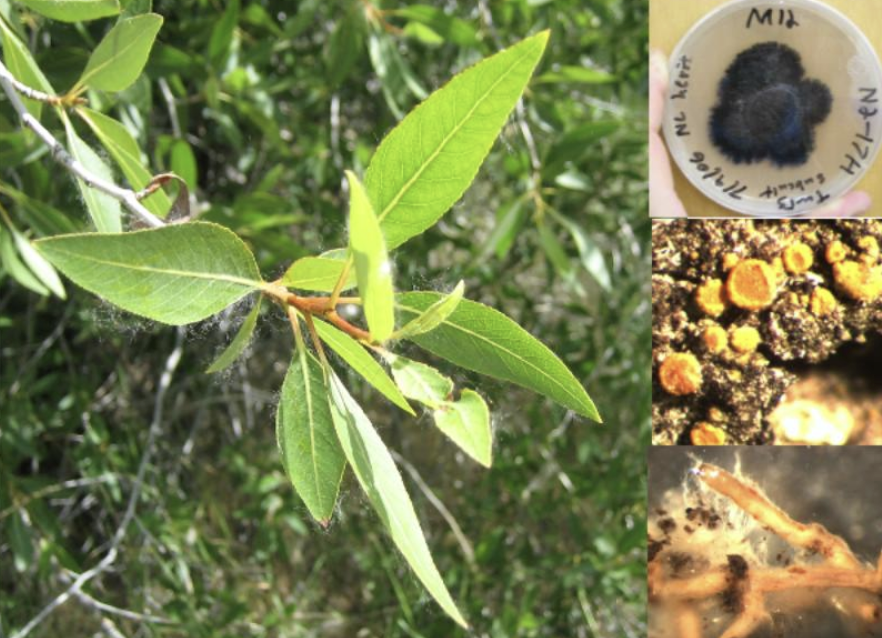
In community ecology we often talk about interspecific interactions with the unstated assumption that members of a single species are functionally equivalent. However, there can be quite a bit of phenotypic variation within a species, a significant portion of which can be due to genetic differences within or among its populations. The field of community genetics is interested in how intraspecific differences in genetics affect species interactions and have cascading effects to entire communities. This is important because it represents an overlooked factor that can structure communities and shape biodiversity, with extended consequences for evolutionary processes in a community context.
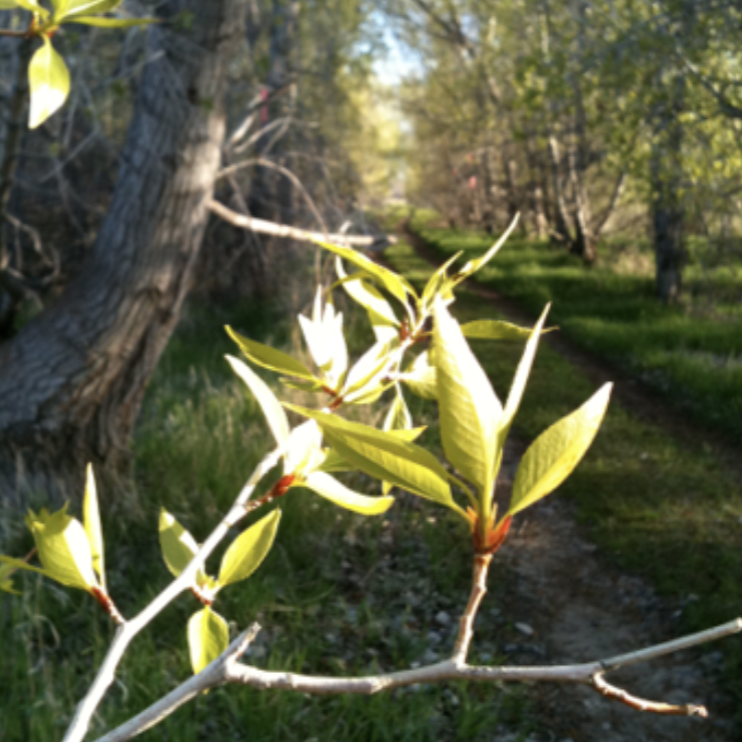
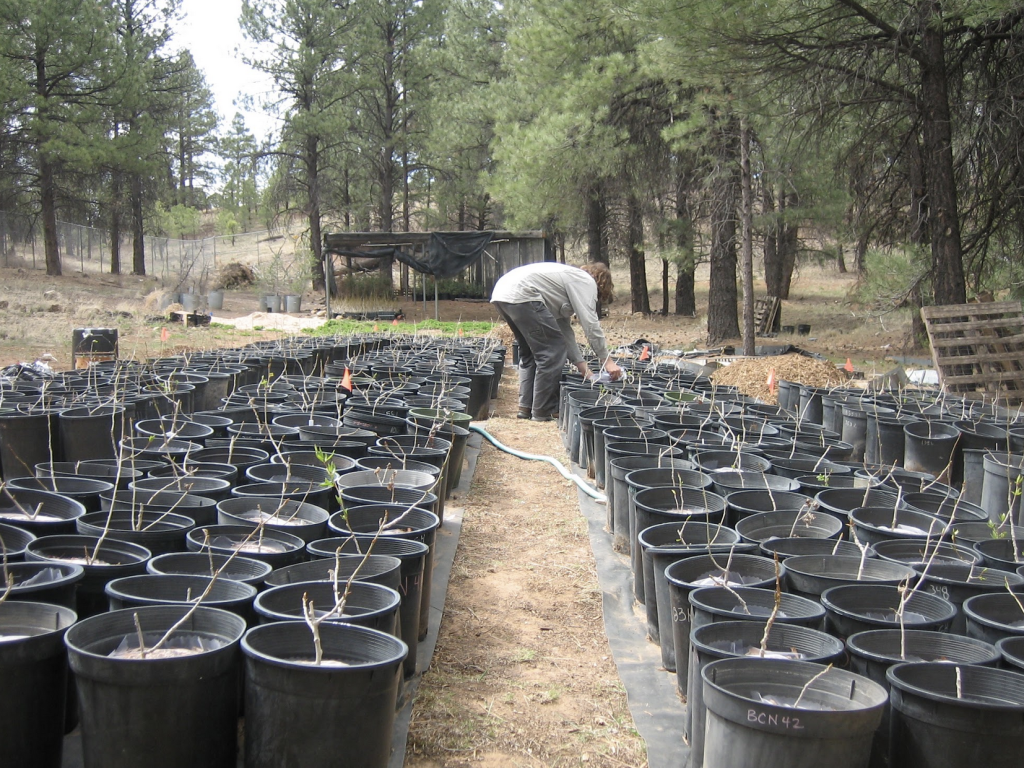
Our work in this field has focused on both aboveground and belowground fungi associated with Populus species of Western North American riparian habitats, as a part of the Cottonwood Ecology group centered at Northern Arizona University. It is not currently an active part of our research program (although much data lurks in our file drawers) but there is always a possibility of integrating community genetics into our more active areas of research (e.g., peatlands, temperate-boreal ecotone).